Like wave on a wall
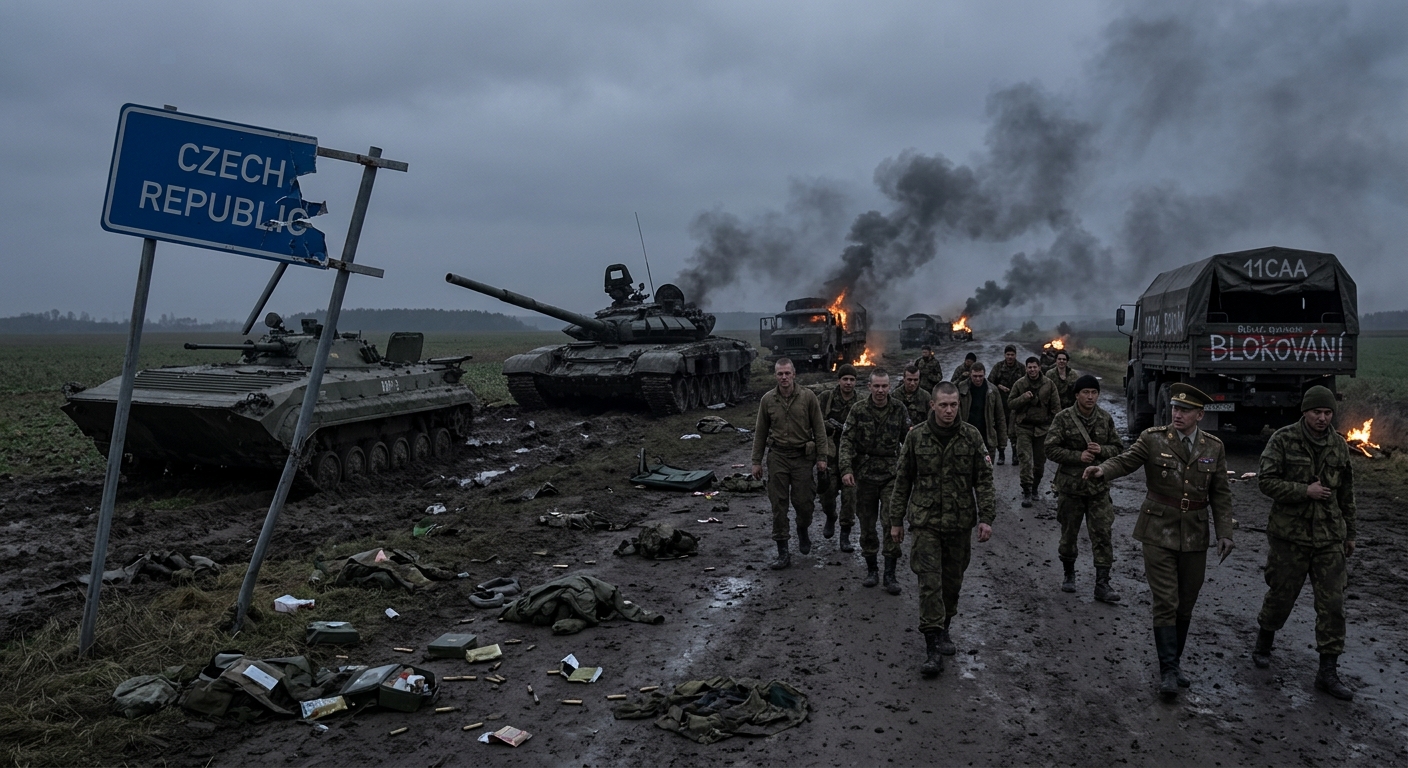
The guns facing Bohumín have gone quiet, but it is not the silence of victory. It is the hollow, dead hush of an engine that has seized in the mud.
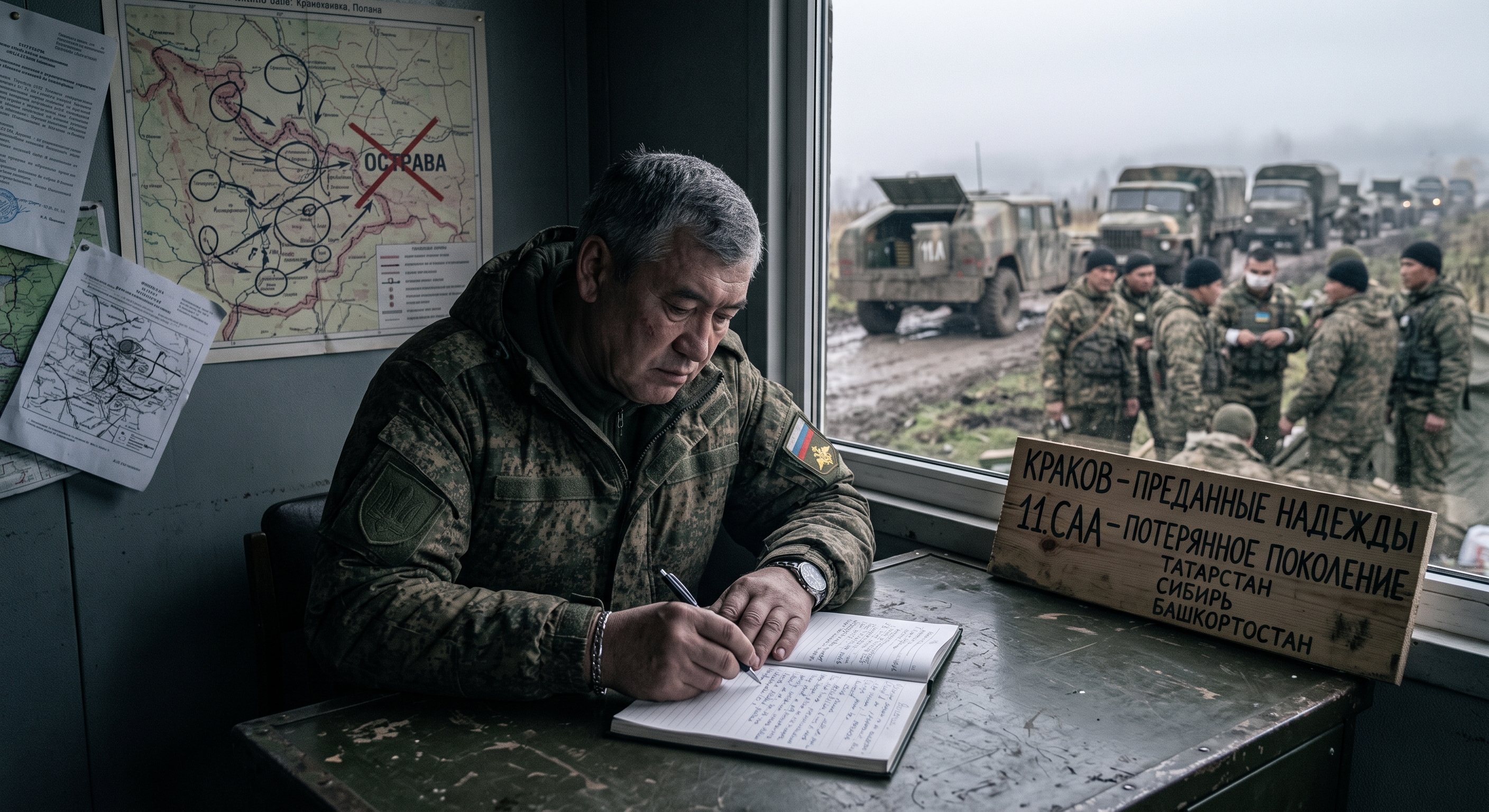
The grand offensive against Ostrava has died where any junior staff officer with a topographic map knew it would: tangled in the irrigation ditches, swollen marshes, and pre-sighted kill zones north of the Moravian Gate. For three days, state media blasted triumphant fanfares about breaking into the Czech frontier. Tonight, the maps in the General Staff room must be burning their fingers. The 11th Combined Arms Army is not consolidating; it has halted, shuddered, and is now being methodically, violently prodded backward into Poland.
From where I sit, overlooking the waterlogged tracks north of Gorzyce, you do not need military intelligence to read the situation. You only need ears. The continuous rumble of forward-moving armor has been replaced by the sporadic, panic-stricken crack of 30mm autocannons fighting off drone ambushes, and the low, agonizing hum of broken-down transport trucks left burning on the road shoulders.
Here is the unvarnished reality of our unraveling:
1. The Logistics Artery Has Severed
The supply tail did not merely stretch; it snapped. The corridor feeding our forward battle groups from Katowice down through the A1 has become a graveyard of soft-skin fuel bowsers and ammunition trucks. Polish light teams and roving NATO-standard loitering munitions have turned every wooded defile and railway underpass into an ambush site.
Forward mechanized companies that reached the outskirts of the border are running dry. Tanks are being abandoned with empty tanks and cold barrels, their crews sabotaging the optronics before walking back along the tree lines. We are rationing artillery shells to single-digit battery salvos while the Czech 7th Brigade’s counter-battery fire lands with surgical, uninterrupted precision across the river.
2. The Internal Fracture: Blood and Class
The lie that this army was bound by shared ideological purpose has completely disintegrated under fire.
For weeks, the staff echelons shoved the sons of Dagestan, Ingushetia, and the impoverished rural provinces of the east into the industrial mincing machine of the Upper Silesian slag heaps. They took the shrapnel, cleared the minefields with their limbs, and watched their comrades drown in the Olza. Now that the advance has collapsed, the rage has boiled to the surface.
In the staging areas behind Godów, you can feel the hatred between the rank-and-file infantry and the privileged technical cadres. The soldiers know they were treated as disposable breach material to buy headlines for the capital. Fistfights and armed standoffs over food, fuel, and medical evacuation are now routine occurrences in battalion bivouacs. When officers give orders to mount counter-attacks, men simply stare at the ground or check their rifles with silent, mutinous defiance. The ideological cement has turned to sand.
3. The Cowardice of the Staff
Most galling of all is the conduct of those who wear gold braid.
The political commissars and senior corps officers who spoke so eloquently of “the inevitable realignment of European space” were the first to pack their staff vans. Yesterday morning, when Ukrainian and Polish recon drones began bracketing the forward command post at Mszana, the senior operational staff did not rally the defense. They relocated thirty kilometers to the rear under armed escort, leaving battalion commanders with dead radios, conflicting operational maps, and no extraction plan.
The much-vaunted blocking detachments—the cowards placed in our rear to threaten retreating infantry—proved entirely useless the moment real artillery started raining on their checkpoints. When the Czech heavy howitzers opened up on the crossroads, the barrier troops abandoned their barricades and fled east alongside the logistics trucks, leaving the bleeding vanguard to fend for itself.
The Reckoning
We are falling back. Not in an orderly, textbook withdrawal, but in an exhausted, sullen crawl, constantly stung by artillery and harassed by an enemy that smells our paralysis.
Twenty years in the service taught me that an army cannot survive without trust. When soldiers discover that their leaders are incompetent, that their lives are valued strictly by their postal code, and that their rear is guarded by executioners who run at the first sound of a shell, the army ceases to be an instrument of state power. It becomes an armed mob looking for someone to blame.
The lights of Ostrava still burn untouched across the border, cold and indifferent. We never had the strength to take them, and now we are paying for our arrogance in blood, diesel, and shame.
Check your compasses. Guard your fuel tanks from your own men. Do not expect relief from the capital.
— Jastreb