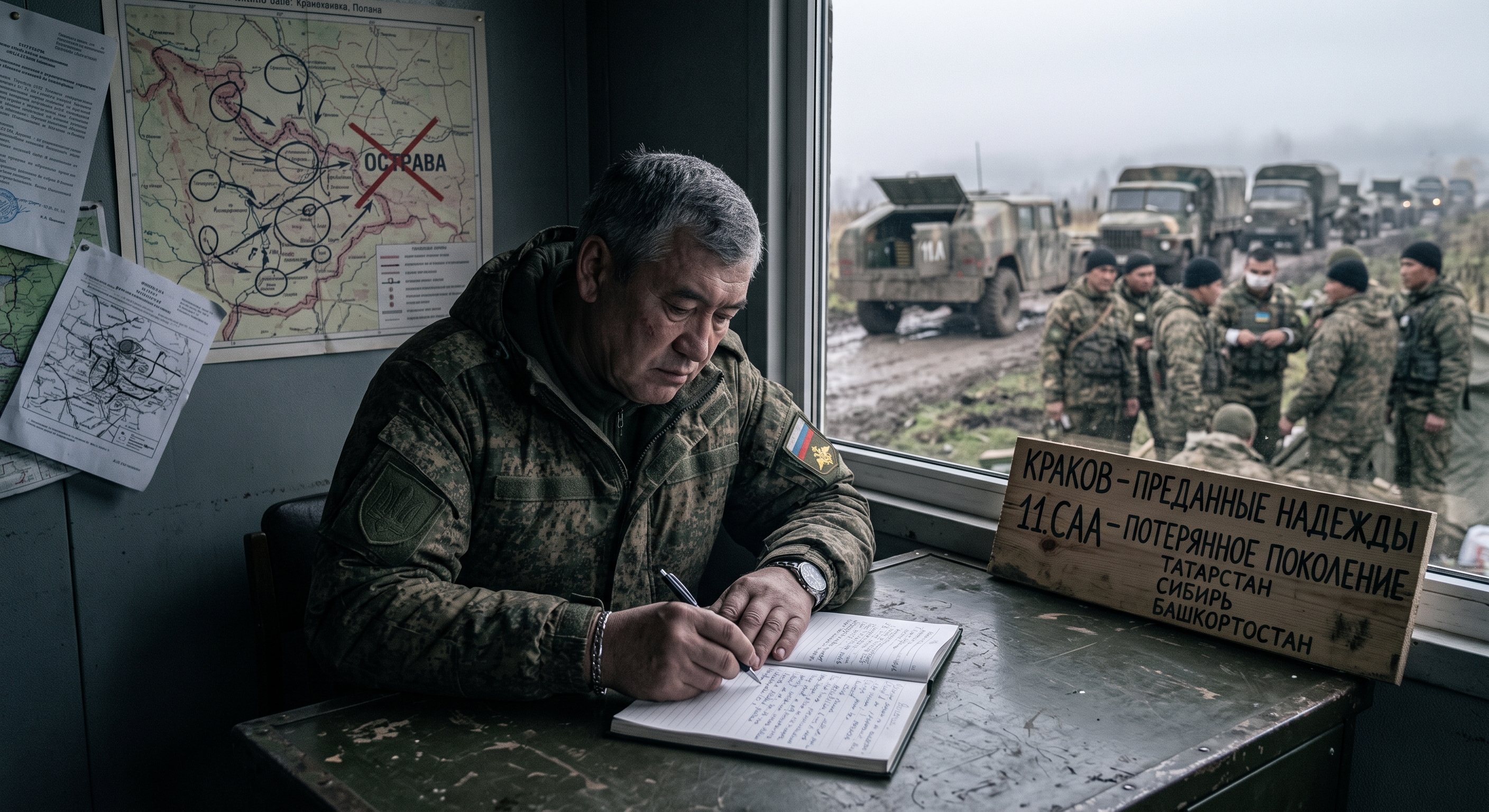
The Awakening
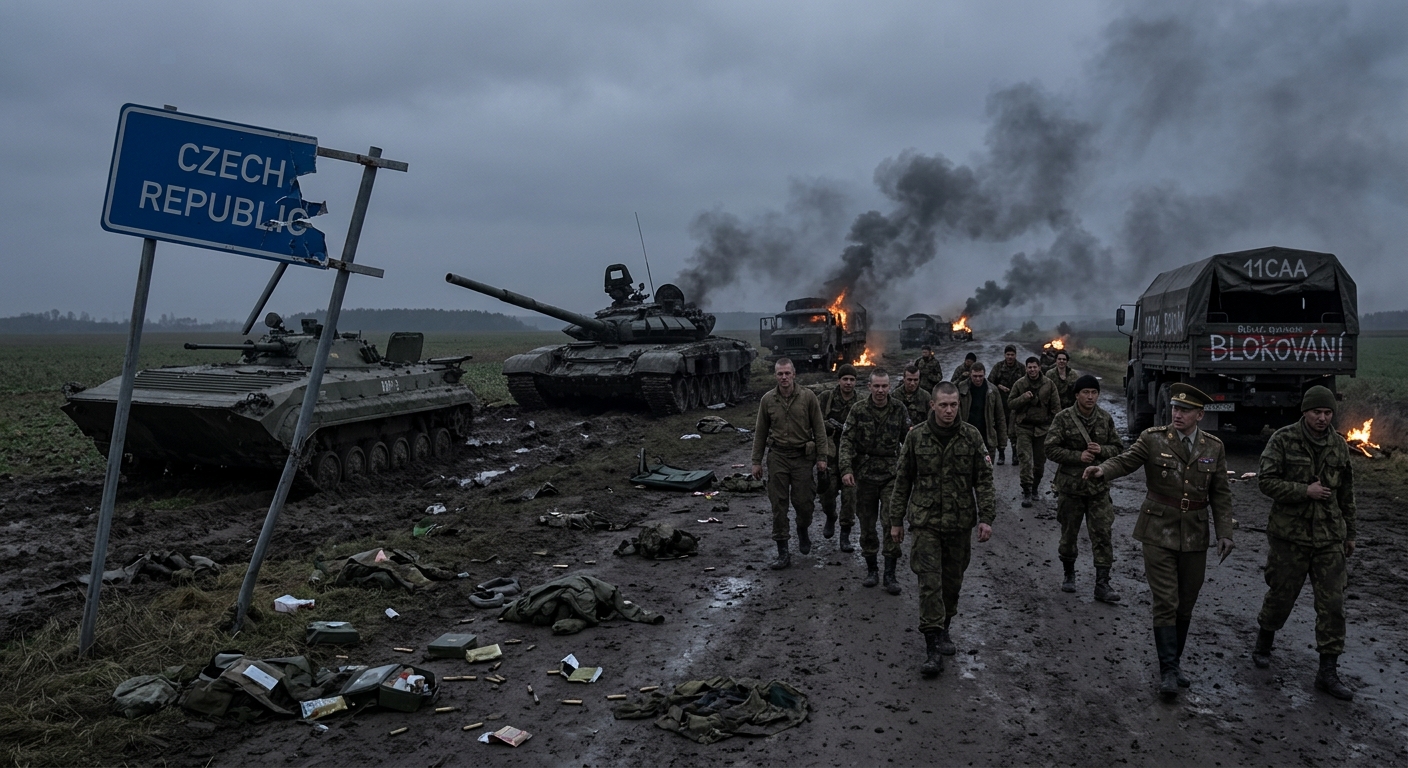
There is no longer any operational vocabulary capable of concealing the truth. We are not conducting an “elastic maneuver.” We are not “shortening the defensive perimeter.” We are running.
The 11th Combined Arms Army has ceased to exist as a unified military organism. What remains between the Olza and the western outskirts of Kraków is a hemorrhaging, eighty-kilometer column of abandoned armor, burning logistics beds, and broken men moving east on foot. The retreat from the Moravian Gate did not stabilize; it broke completely under the weight of its own exhaustion, and turned into a catastrophic, humiliating rout.
From every ridge and bridgehead along the A4 corridor, the sky belongs to NATO loitering munitions and Polish strike drones. They hunt at will. Every bottleneck, every service station, every overpass is an abattoir of incinerated KamAZ trucks and abandoned infantry fighting vehicles. The men do not even bother to clear the wrecks anymore; they swerve into drainage ditches until the axle snaps, abandon the vehicle, throw away their helmets, and join the barefoot march along the asphalt.
Here is the bitter indictment that must be spoken aloud before the censors pull the plug on this frequency:
1. The Total Collapse of the System
Logistics did not just fail; the concept of supply has vanished entirely. Forward units have not received rations or small-arms ammunition in seventy-two hours. Soldiers are scouring abandoned rural farmsteads for dry bread and siphoning diesel from burning wrecks to keep a handful of medical transports crawling.
The harassment is perpetual. Polish light cavalry, territorial units, and specialized drone detachments shadow our flanks, cutting off stragglers and picking apart any unit that attempts to dig in. We cannot stop. To stop is to be spotted by a thermal sensor, bracketed by Czech or Polish heavy howitzers, and obliterated within four minutes.
2. The Great Treason of the High Command
History will record the names of the generals who sat in their air-conditioned staff bunkers in the capital and drew fantasy arrows across the map of Silesia. Those arrows were paved with the bones of rural conscripts and Caucasian sons who never had a stake in this geopolitical hallucination.
When the offensive choked in the mud north of Ostrava, the high command had an opportunity to save this army. Professional officers would have ordered a phased, covered withdrawal to fortified positions on the Vistula. Instead, blinded by vanity and terrified of admitting defeat to the political leadership, they issued criminal, suicidal orders: “Hold at all costs. Counter-attack without fuel. Execute those who retreat.”
The higher leadership failed their men in every metric known to military science. They sent an army designed for short, sharp maneuvers into an industrial war of attrition without ammunition, without air cover, and without an exit strategy. And when the front predictably shattered, the senior staff did not stay to guide the retreat—they commandeered the last operational staff helicopters and vanished eastward, leaving junior lieutenants and conscripts to be shredded in the defiles.
3. Political Delusion Brought Us Ruin
Let us drop the final polite fiction: this disaster is not merely an operational failure. It is the direct consequence of a corrupt, megalomaniacal political leadership that has driven Ocassus into historical ruin.
They built an ideology on grievance and conquest, feeding the public romantic tales of our “inevitable dominance” over Central Europe, while stripping the armed forces bare through institutional theft, nepotism, and systemic lies. They believed their own propaganda. They thought modern nation-states would dissolve at the mere sight of our armor. Instead, they united a continent against us, isolated our economy, and destroyed the finest formations our country spent thirty years building.
For twenty years I served in uniform. I believed in defending our borders. I believed in the brotherhood of the ranks. But patriotism does not mean participating in a collective suicide pact dictated by aging men in marble offices who have never seen a man bleed out on cold asphalt.
The lights of Kraków are visible through the driving rain, but there is no sanctuary there. There are no fresh divisions waiting to relieve us. There are only empty warehouses, panicked municipal officials, and the sound of approaching artillery.
Our leaders promised us an empire. They gave us a slaughterhouse.
If any of us survive the gauntlet to Kraków, we will remember who sent us here. And we will remember who ran first.
— Jastreb